Tesla Model S or X, 2012–2020
Your Tesla has a coolant problem. We fix it. Permanently.
The rotor seal inside every 2012–2020 Large Drive Unit will eventually fail. We fix it permanently.
The Problem
Every Model S or X has it.
Not if. When.
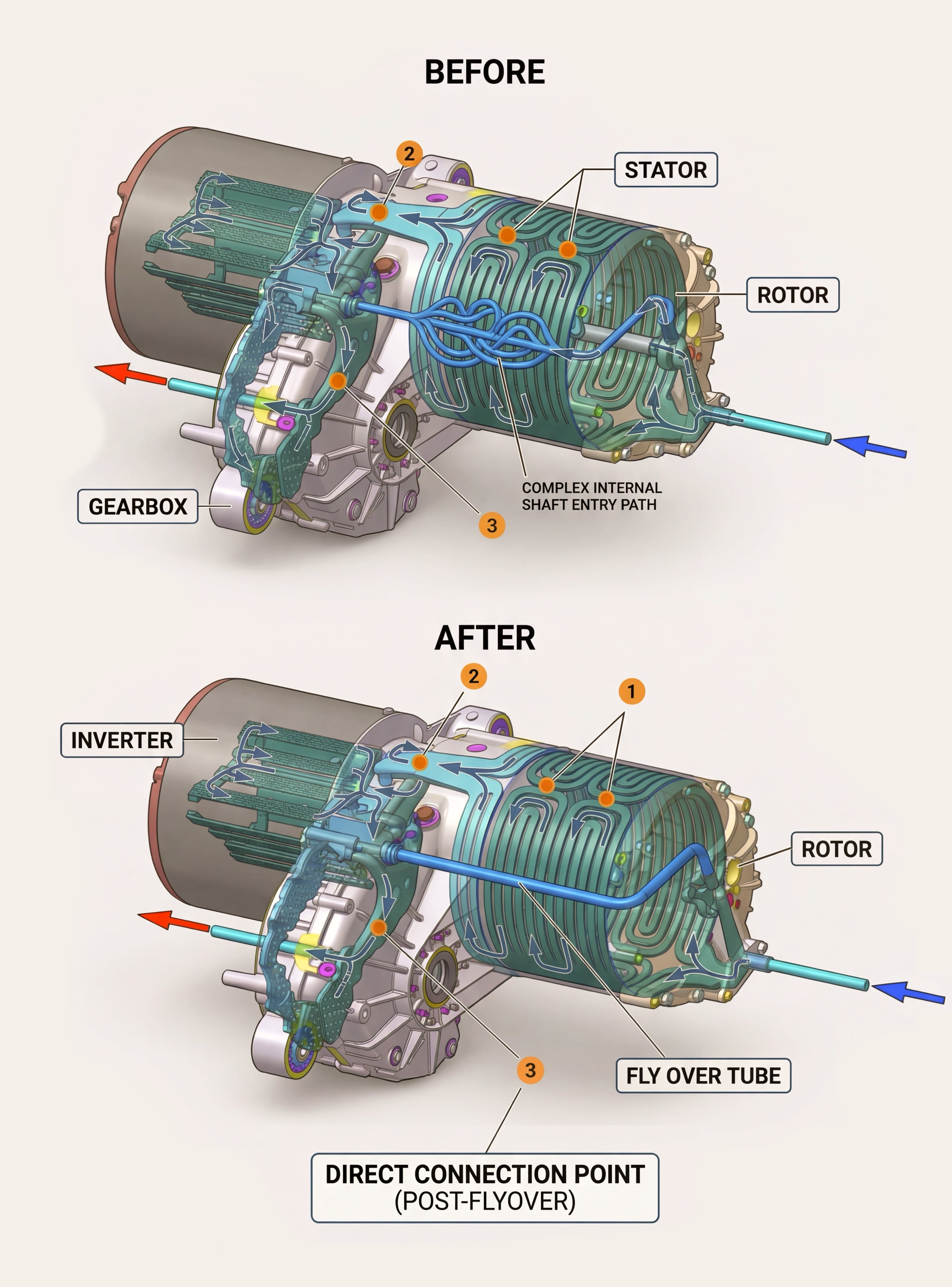
Here's the short version: your Tesla's rear motor has liquid coolant flowing through it to keep it cool. Some of that coolant flows through the spinning centre of the motor, the rotor, via a hollow shaft. Three small rubber seals are supposed to keep the coolant inside that shaft. They don't last.
When those seals fail, coolant leaks into the motor's electrical components. It corrodes wiring, destroys bearings, and can short-circuit the entire drive unit. You might notice a whining noise, reduced power, or error messages. Or you might notice nothing at all until the motor stops working.
This isn't a rare defect. It's a design limitation that affects every 2012–2020 Tesla Model S and Model X with a Large Drive Unit. Tesla acknowledged it in later revisions by removing the rotor coolant path entirely. That's exactly what our service does, applied to the motors that still have the original design.
What happens when the seal fails
The three rubber lip seals inside the rotor shaft break down from heat cycles and age. This is material science, not bad luck.
Liquid coolant leaks past the seal into the rotor cavity. It wicks into the stator windings, corrodes connectors, and destroys bearing grease.
You might notice a whining noise or reduced power. Or nothing at all. The damage often builds for months before anything obvious happens.
The motor shorts, the inverter floods, the drive unit needs full replacement. That's $10,000–$20,000 at a service centre.
What the damage looks like
We stripped one down.
Here's what coolant does.
Every photo here comes from one real Large Drive Unit that came through our workshop. The rotor shaft seals had been letting coolant past for long enough to leave a mark on nearly every part inside.
None of it showed up on a diagnostic scan. This is the kind of damage you only find once the unit's on the bench and stripped right down.

The hollow shaft coolant runs through, bored straight down the centre of the rotor. Years of leaking past the seals has left the inside caked in rust.
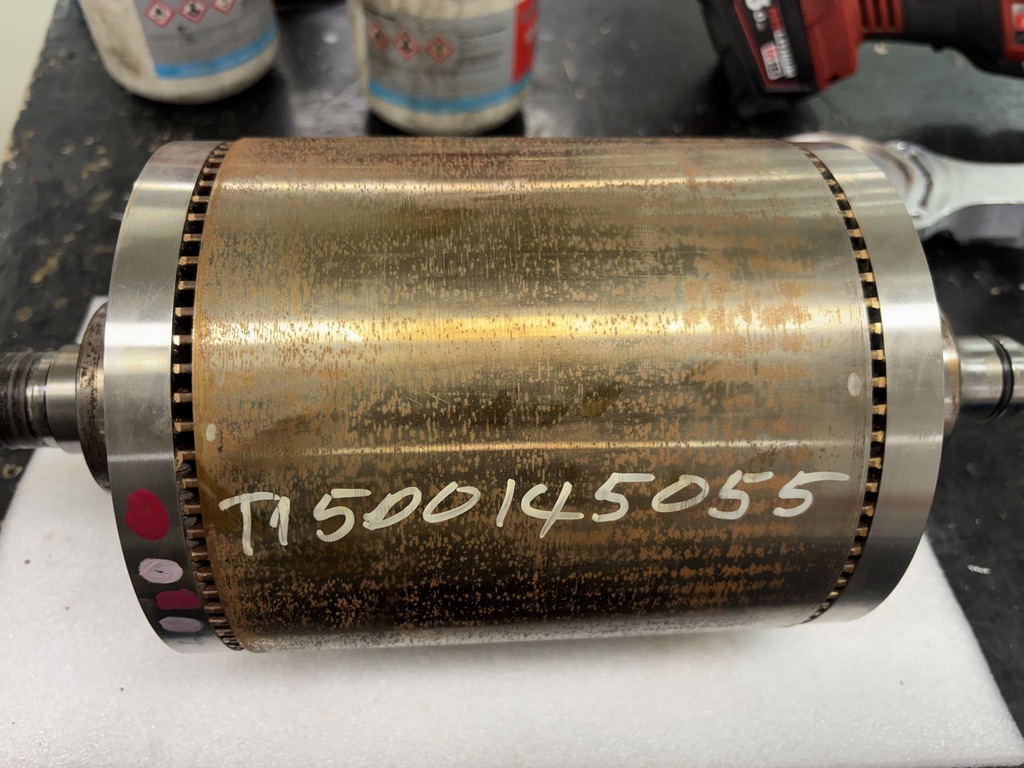
The outside of the rotor, corroded right around and smeared sideways where it's kept spinning against the contamination. There's rust into the core, too.
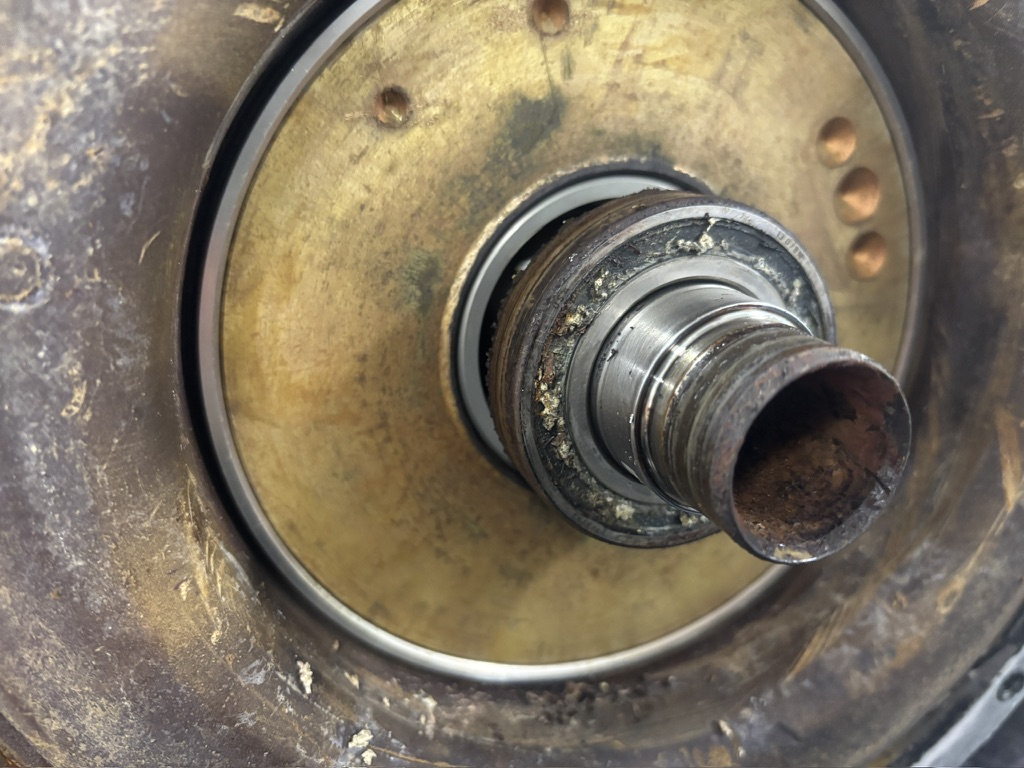
Corrosion on the rotor bearing, with the grease washed out of where it's meant to sit. It still turns. It's living on borrowed time.
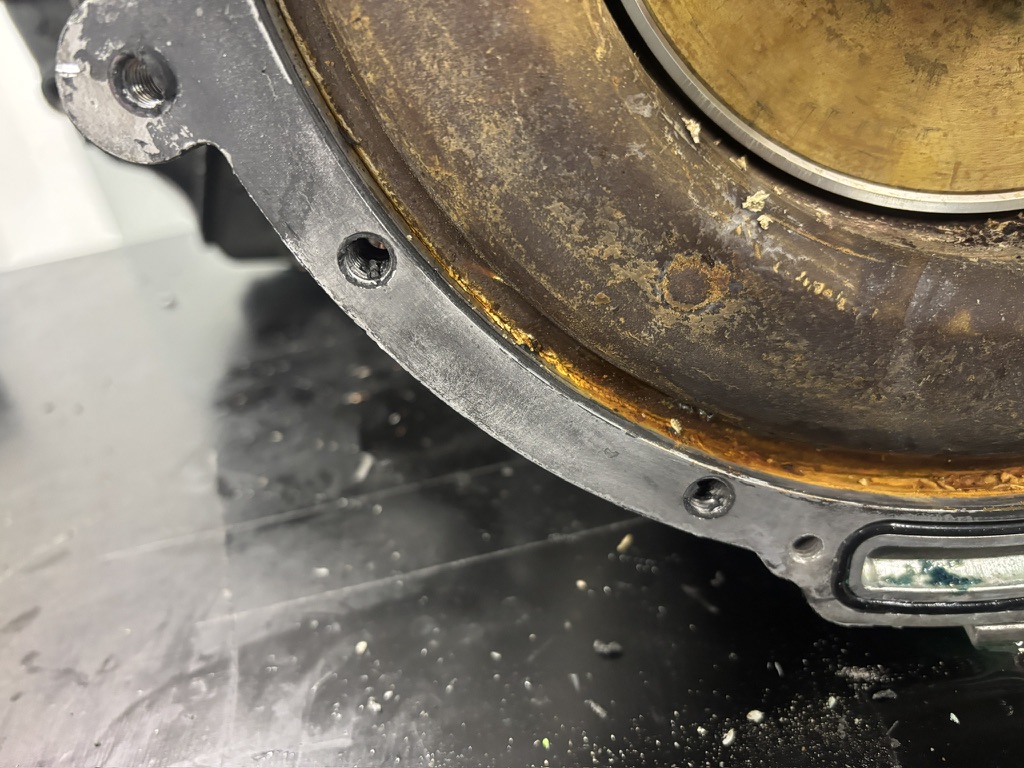
Pull the end cap and the corrosion's right there, pooled around the lower edge of the stator where the coolant settled.
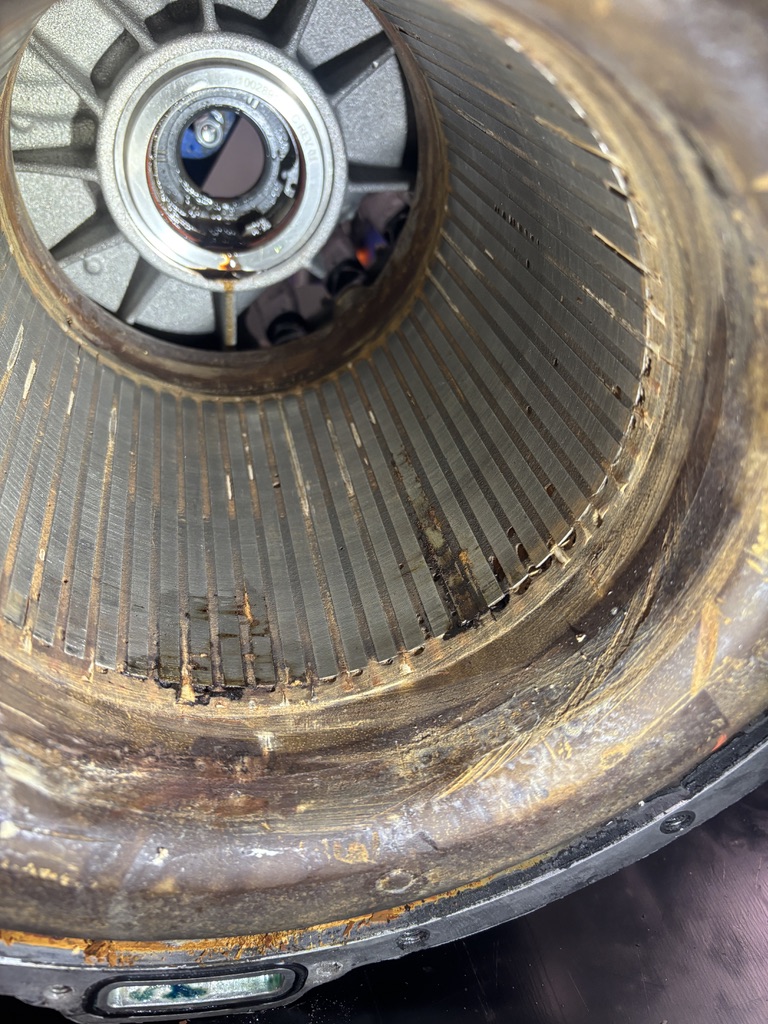
Deeper in, the potting between the stator plates has corroded and swollen up. Far enough that it's been rubbing on the rotor.
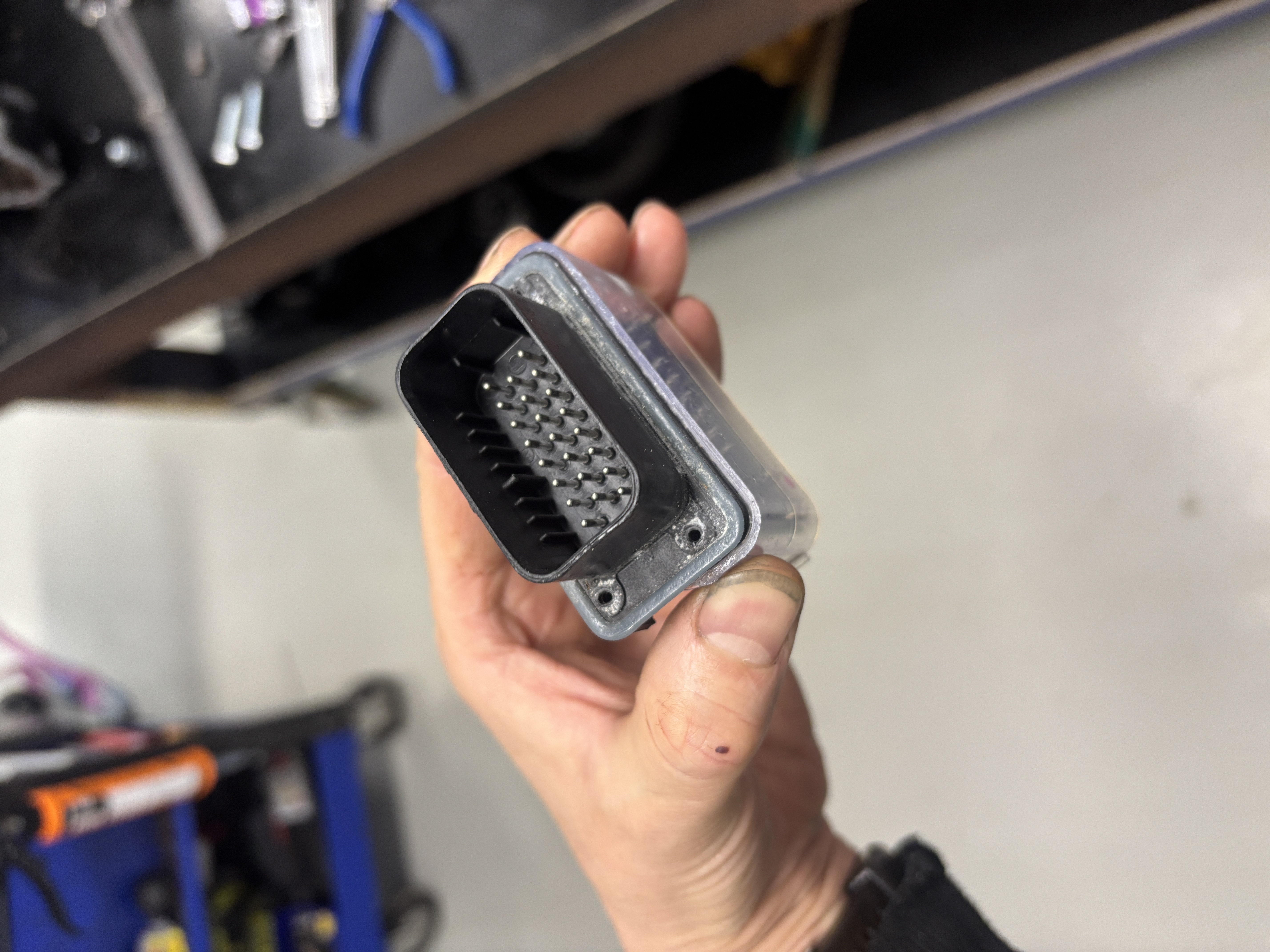
The main motor connector, corroded across several of its contacts. This is the high-voltage join that carries the lot.
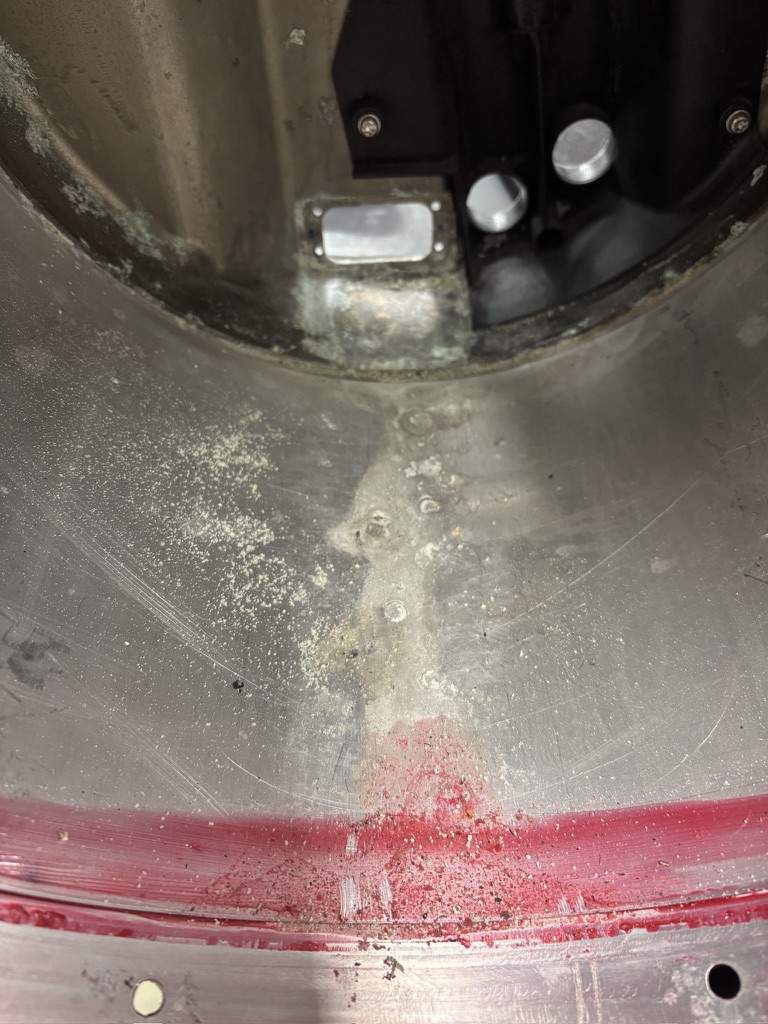
Corrosion blooming inside the inverter cover, worst around the connector. White powder where there should be clean metal.
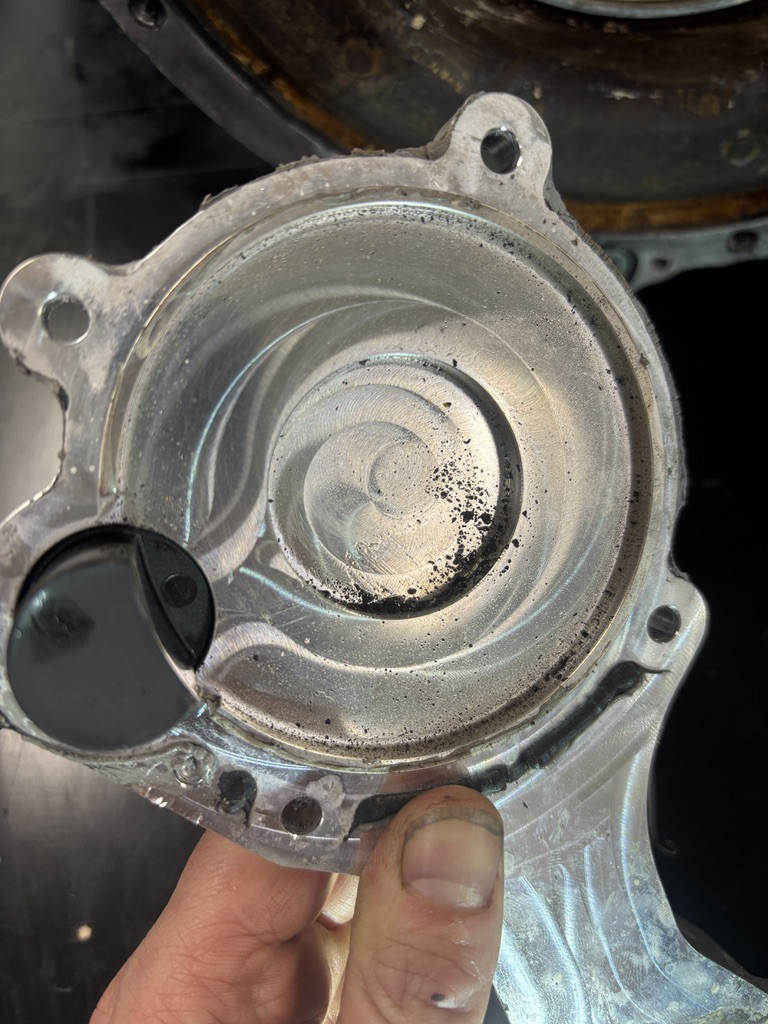
Even the little encoder cap on the end had moisture sitting inside it and flecks of rust starting to form.
Worth being straight about
What the delete can, and can't, fix.
Our coolant delete stops coolant getting into your motor from here on, for good. What it can't do is undo damage that's already been done.
If coolant has already been leaking inside, that corrosion is there whether we reroute the coolant path or not. The unit in the photos above is the proof. It had already had a coolant delete done, and it still looked like that. The damage came first.
The hard part is that existing damage often gives you nothing to go on. No whine, no vibration, nothing a quick inspection turns up. The only way to know for certain is to pull the motor right down and look.
And a full teardown to investigate isn't cheap. By the time we've spent the hours stripping a motor to check it properly, you're not far off the cost of simply fitting a new one.
So here's the honest version. If your motor's healthy, the delete protects it for good and it's money well spent. If you think the damage might already be done, talk to us first and we'll help you weigh up an inspection against a straight replacement before you spend a dollar.
The only workshop in Australia offering this as a full-service fix.
The Fix
Complete teardown.
Precision fix. Every bolt replaced.
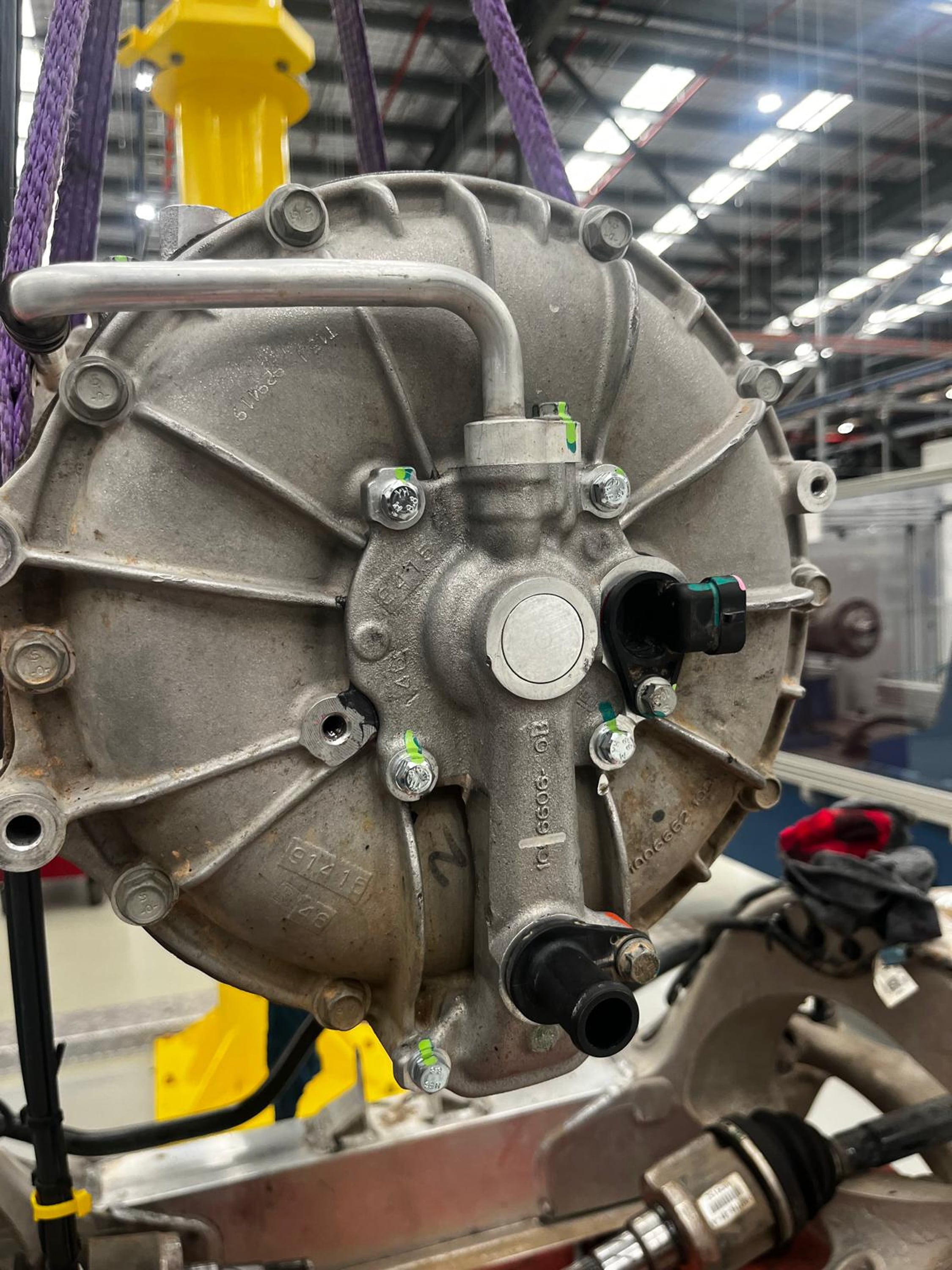
This isn't a parts-cannon approach. We strip the unit down, address the root cause, replace everything that should be replaced, and put it back together to factory spec.
Full disassembly
Complete teardown of the Large Drive Unit. Every component removed, inspected, and catalogued. We need to see everything before we touch anything.
Deep clean
Thorough removal of all coolant contamination from the rotor, stator, and inverter components. We use gentle cleaning techniques. No wire brushes on critical surfaces, no shortcuts that create debris.
Stator tube modification
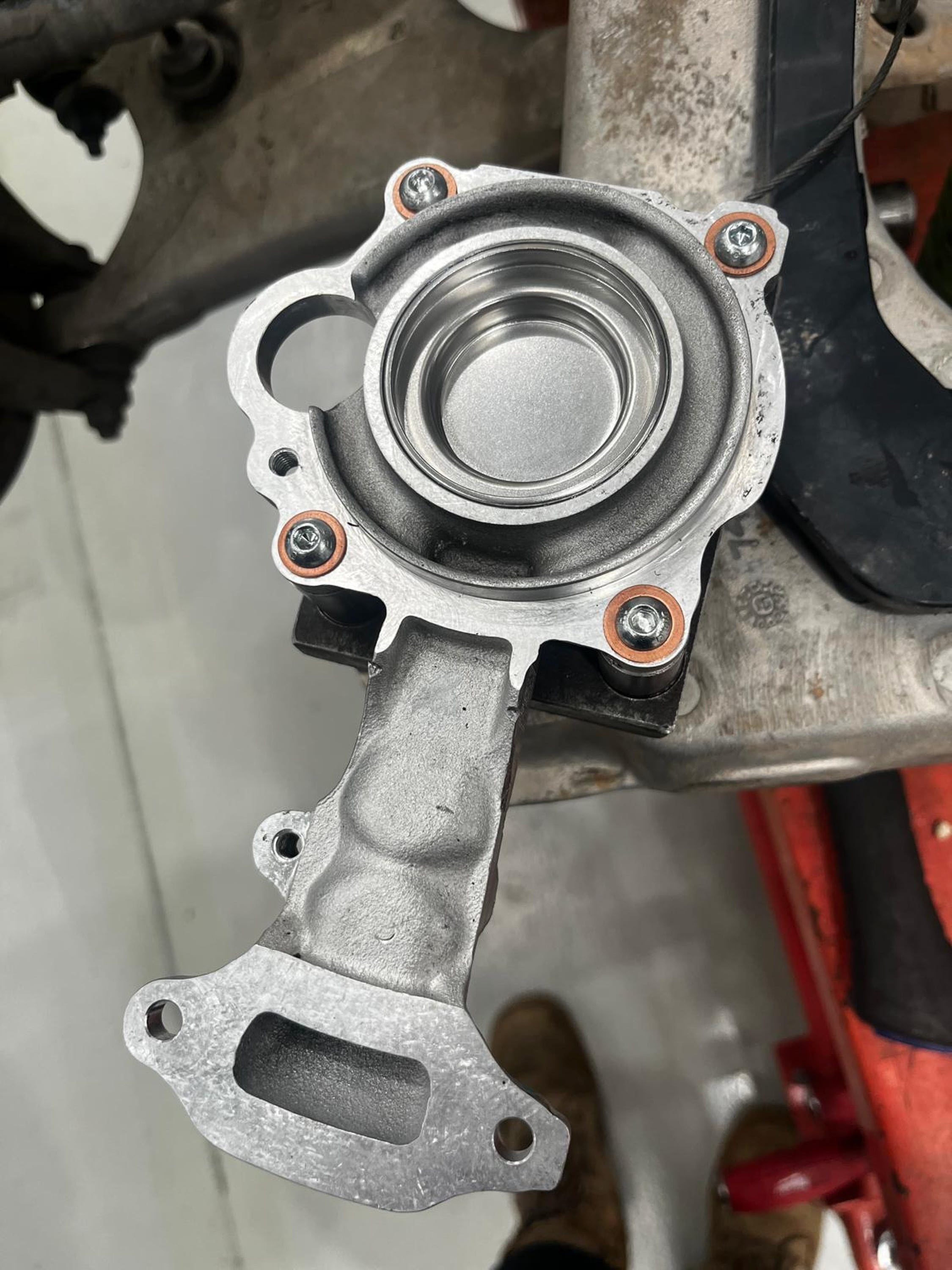
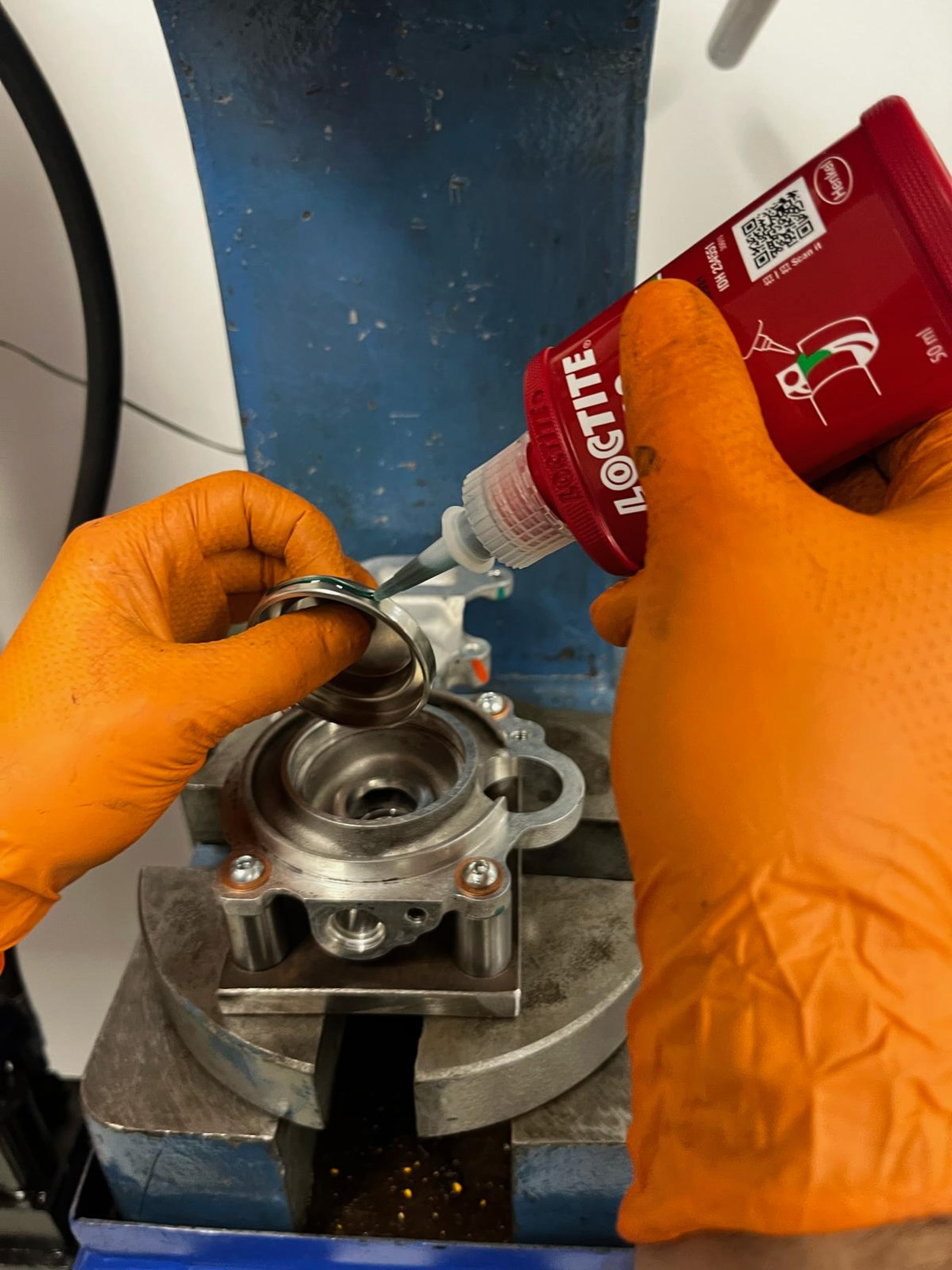
The coolant delivery tube is precision-milled and capped with a machined manifold cap, sealed with high-temperature sealant. The rotor coolant path is permanently eliminated, matching the manufacturer's own revised design. Gearbox cooling is completely unaffected and continues to flow normally.
Half-shaft seal replacement
Both half-shaft seals replaced as standard. These are a secondary leak path that most workshops overlook. We don't.
Precision rotor check
Rotor inspected for contamination damage and runout. Bearings assessed. If coolant has reached places it shouldn't, we'll tell you exactly what we've found.
Factory-spec reassembly
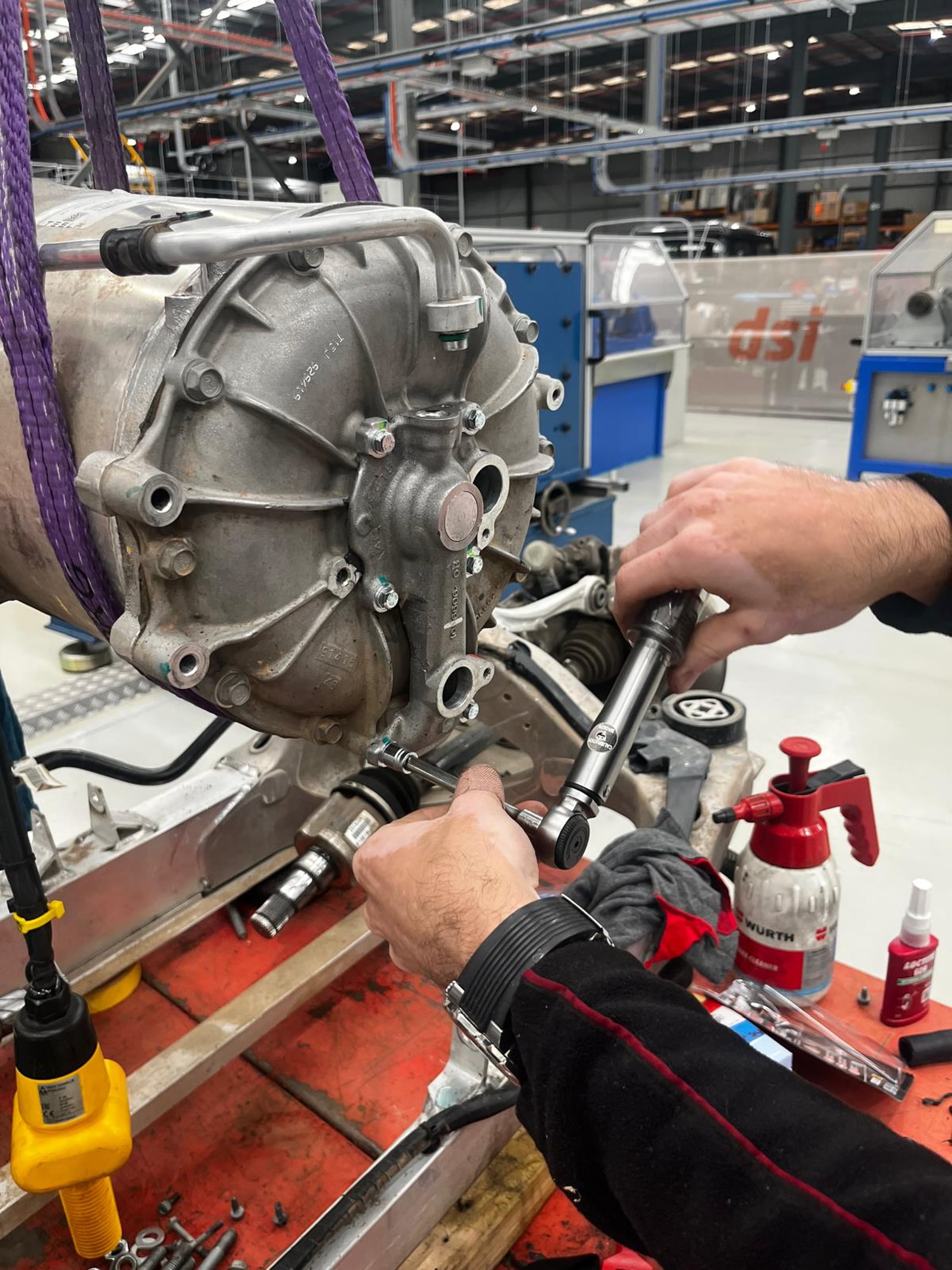
All single-use bolts replaced with new. Every fastener torqued to factory specifications. Not "close enough". Exact. The unit goes back together the way it should have been built.
From our workshop

Seen enough?
Book Your Fix
Why Jaunt
The only workshop in Australia doing this.
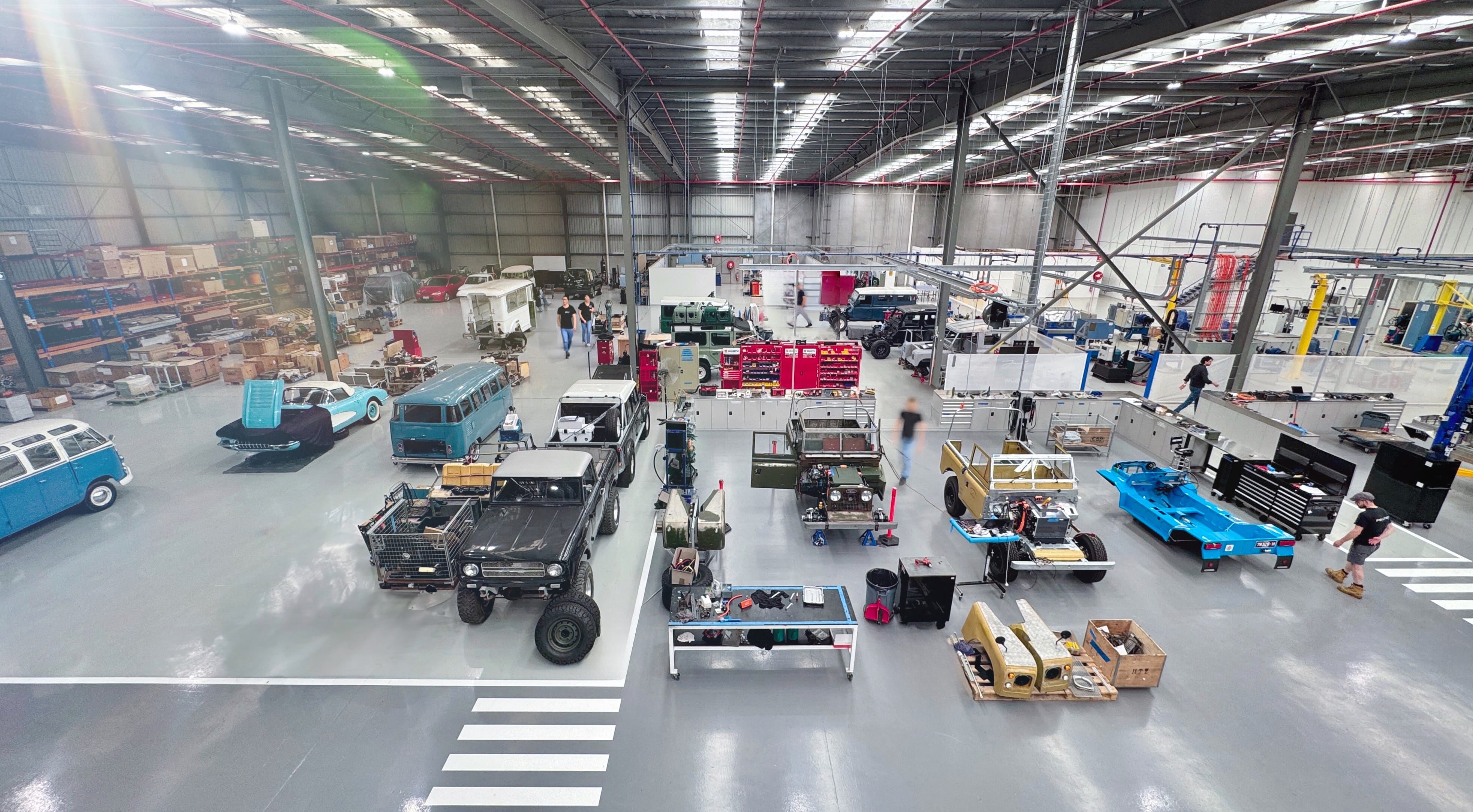
Full machine shop
We don't send parts out. We mill, machine, and fabricate in-house. The stator tube modification requires precision tooling that most EV workshops simply don't have.
EV specialists since 2018
We've been pulling apart and rebuilding electric drivetrains for eight years. This isn't a side project. High-voltage powertrains are our core engineering discipline.
OEM-grade standards
Every bolt torqued to spec. Every seal replaced. Every step documented. The same standards we apply to our award-winning vehicle builds, applied to every LDU we service.
Award-winning engineering
Our work has been recognised by the Good Design Australia Gold Award, the Victorian Premier's Design Awards, and AFR Best Cars. We bring that same precision to this service.
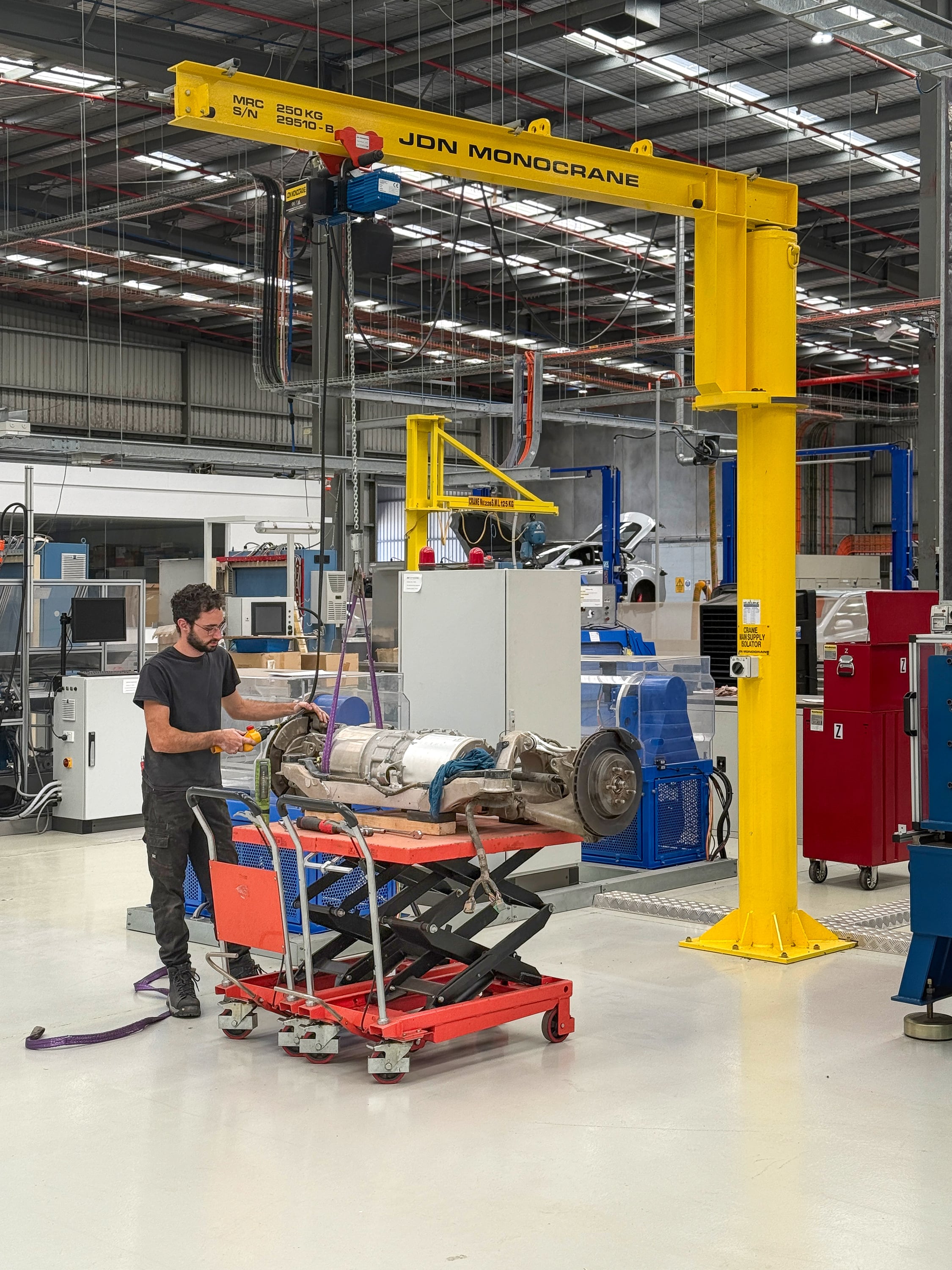
Precision engineering. Every component inspected.
Pricing
Transparent pricing.
No surprises.
- Complete Large Drive Unit teardown and inspection
- Precision stator tube milling and manifold cap installation
- High-temperature sealant application
- Half-shaft seal replacement (both sides)
- All single-use bolts replaced with new
- Factory-spec torque on every fastener
- Precision rotor and bearing inspection
Full drive unit replacement at a service centre: $10,000–$20,000.
Since the work was completed I have driven Melbourne to Port Lincoln and return, 3,000 kilometres, and the car behaved absolutely normally. No leaks, no warnings. I am completely satisfied with the cost and impressed with the quality of the work.— P90D owner, Sydney
Every seal replaced. Every bolt torqued to spec.
FAQ
Common questions.
Get Started
Book your
coolant delete.
Tell us about your vehicle and we'll be in touch within one business day to confirm availability and schedule your service.
Not sure if your drive unit needs this work? Get in touch anyway. We're happy to help you figure it out.
Booking request received.
Thanks. One of the team will be in touch within one business day to confirm your slot and talk through anything specific to your car.
What happens next
- We call or email to confirm dates and answer any questions.
- You drop your Tesla at our Scoresby workshop. We do a full teardown and inspection.
- You collect it 2 to 3 business days later with a permanent fix and a written report on what we found inside.
Want to talk sooner? Call Marteen on 0414 555 114, Monday to Friday, 8am to 5pm.